About NUV-HOP

The first edition of NUV-HOP (Northern Uganda Village Health Outreach Project) took place in the summer of 2013. What began as a collaboration between Belgian and Ugandan medical students gradually grew into a broader international initiative. In 2016, a team of British medical students from Manchester joined the project; this collaboration later came to an end due to the COVID-19 pandemic.
NUV-HOP was founded with a strong focus on medical outreaches: mobile, one-day medical clinics designed to support and strengthen local health centers. While curative care remains a central component of these outreaches, the project has increasingly shifted its attention toward preventive care over the years. In line with this vision, HealthTalks were introduced in 2015 in the villages surrounding the Awoo health center, aiming to strengthen health awareness and prevention at the community level.
One of the main challenges for NUV-HOP is to develop an initiative that is both sustainable and responsive to the needs of local communities. For this reason, the project places strong emphasis on continuous consultation with local partners and health centers, ensuring that activities are adapted to the local context and priorities.
Beyond the direct project activities, NUV-HOP provides a rich learning environment for all students involved. Ugandan and Belgian medical students work closely together, exchanging knowledge and experiences within a real-life healthcare setting. This collaborative approach not only strengthens the quality of care provided, but also fosters mutual learning and long-term engagement across different healthcare contexts.
Aim
Northern Uganda is one of the most vulnerable regions in Uganda, a country facing significant socio-economic challenges. Many communities, particularly in rural areas, continue to experience limited access to safe water, adequate sanitation, healthcare, education, and infrastructure. These challenges are often more pronounced in the countryside, where hygiene and sanitation conditions remain inadequate.
Studies have shown that a large proportion of the disease burden in Uganda can be prevented through relatively simple measures such as improved hygiene, sanitation, vaccination, and health education. Preventable diseases continue to place a heavy burden on individuals and families, reinforcing cycles of illness and poverty. Breaking this cycle requires coordinated, sustainable, and locally adapted interventions that make use of available resources.
The Ugandan Ministry of Health has set clear priorities, including reducing maternal and infant mortality, malnutrition, and the burden of diseases such as HIV/AIDS, tuberculosis, and malaria, as well as improving equitable access to healthcare. However, reaching the most remote and underserved populations remains a major challenge. People living in small rural villages often have limited access to medical care, preventive services, vaccinations, and health education related to hygiene and family planning.
The recovery and reconstruction of Northern Uganda, following decades of conflict, is a slow and ongoing process. The general aim of the project is therefore to contribute to sustainable and affordable healthcare for vulnerable communities in Northern Uganda, with a strong focus on prevention, collaboration with local partners, and long-term impact.
Specific aims of the project are:
- To improve the general state of health in the remote villages in Northern Uganda.
- To prevent transmitted diseases.
- To establish free medical camps in selected communities with a high need for health care in Northern Uganda.
- To start a system of health education based on outreaches that focusses on issues of hygiene, reproductive health, malnutrition, malaria, sexually transmitted diseases, HIV/AIDS and family planning.
- To encourage volunteer work by active outreaches and media attention in the area.
- To provide an international internship for medical students in the GRRH.
Preparation
The project is preceded by an extensive preparation phase in Belgium. Through introduction days, meetings, workshops, and a training weekend, students are gradually familiarized with the project, its values, and its practical functioning. During this preparation, attention is given to cultural sensitivity, ethical responsibility, and working within the medical outreach circuit. Students also learn to collaborate as a team rather than acting individually.
Experienced students take on a guiding role, while new students are actively involved and supported, allowing knowledge and responsibilities to be passed on within the project. This ensures continuity and strengthens the collective approach of NUV-HOP.
At the start of the project in Uganda, a joint introduction day is organized in Gulu for all volunteers, both Ugandan and Belgian. During this day, the outreach circuit and project workflow are reviewed together, roles are clarified, and practical agreements are made. This shared preparation creates a common understanding and lays the foundation for effective collaboration throughout the project.
During the implementation of the project, students work closely with and under the supervision of Ugandan doctors and local partners, allowing for continuous learning, guidance, and reflection within a real-life healthcare setting
Outreaches
As part of the NUV-HOP project, we organize monthly medical outreach days in small villages across Gulu, Amuru, and Nwoya districts. Each outreach is a one-day event where both Ugandan and Belgian medical students work side by side under the supervision of qualified Ugandan doctors to provide accessible healthcare to the local population. Thanks to this collaboration, we are able to treat between 500 and 1500 patients during each outreach programme.
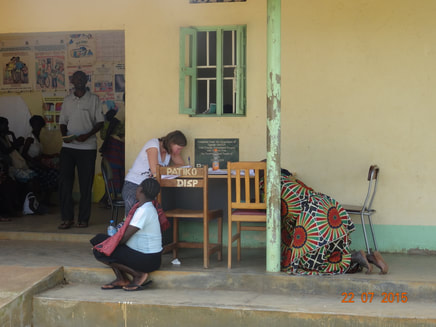
The day begins with setting up the clinic, with all preparations, including medication and logistics, carefully planned in advance in collaboration with the local health centers. Patients enter a structured circuit, starting with a check of vital signs and registration. The most severe cases are prioritized and immediately attended to in an emergency area, ensuring urgent care is provided efficiently. Other patients continue through consultations, diagnostic testing, and treatment, with medications dispensed at the pharmacy once prescribed.
In addition to providing curative care, the outreaches include screening for common regional illnesses. The collected data is analyzed to gain valuable insights into the health needs of each community. These findings are shared with local health centers, supporting better-informed healthcare planning and future interventions.
These outreach days are a vital part of our mission to improve health access, strengthen preventive care, and build sustainable collaboration with local health professionals, all while empowering communities with better knowledge and resources.
Health talks
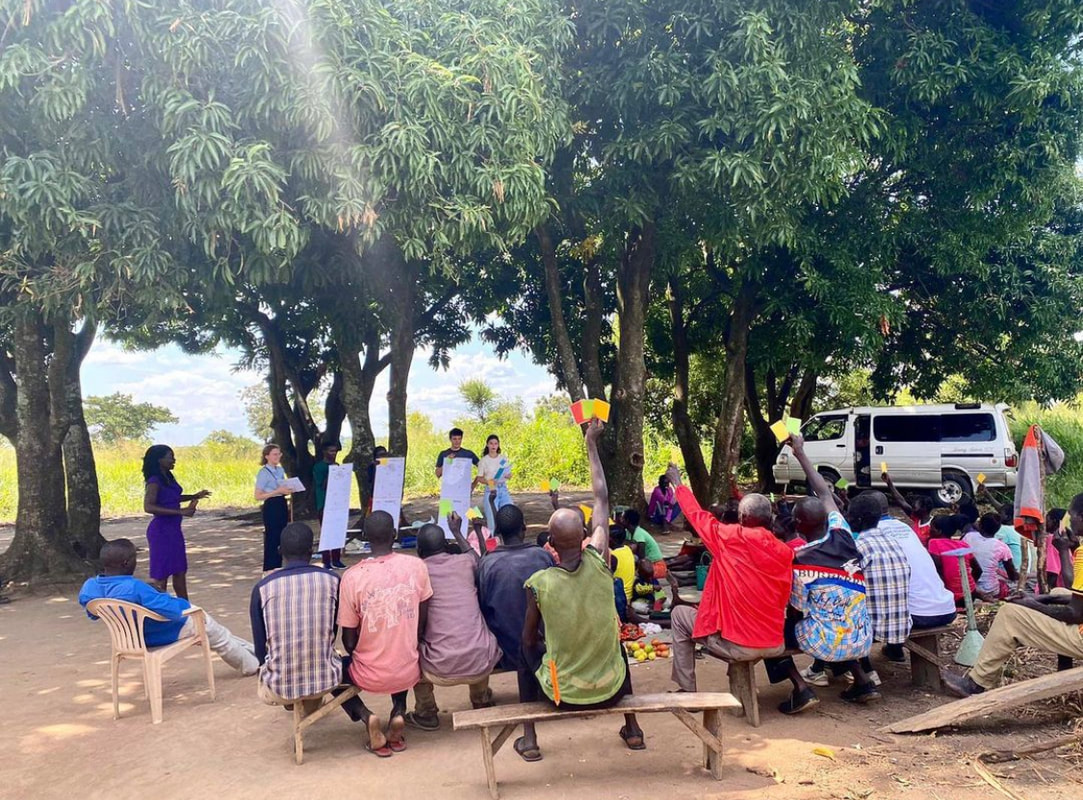
As part of the NUV-HOP project, we organize interactive education days held in local communities and schools across selected villages in Northern Uganda. These sessions are carried out in close collaboration with local health centers and are led by both Ugandan and Belgian medical students, combining local knowledge with international perspectives to provide relevant and accessible health information. The topics are carefully adapted to the needs of the villages, including family planning, dental and oral hygiene, medical adherence, menstrual health, puberty, teenage pregnancy, and environmental hygiene and sanitation. Follow-up and continued support are provided in collaboration with the local health centers, ensuring that the impact of the sessions is long-lasting.
Even though preventive care may not sound spectacular, it is probably the most effective weapon against communicable diseases in Northern Uganda. Research has shown that up to 70% of the disease burden in Uganda can be prevented through simple hygiene measures and vaccination. This is why prevention remains the primary focus of our interventions.
Health talks are a key part of our efforts to strengthen health awareness and preventive practices in the community, bringing together knowledge, collaboration, and sustainable impact.
GRRH Observership
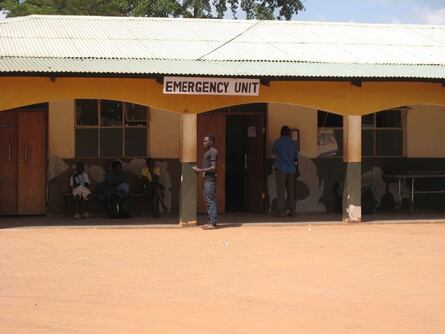
Medical students participate in a clinical observership at Gulu Regional Referral Hospital across various departments. All activities are strictly observational and educational in nature, and students do not perform any hands-on or invasive medical procedures.
In departments such as the operating theatre and the delivery room, students are allowed guided observation only. Due to the complexity of these environments and the level of expertise required, students do not actively participate in clinical decision-making or patient care in these settings.
In other departments, students observe daily clinical practice, patient interactions, and multidisciplinary collaboration, allowing them to develop clinical reasoning, contextual understanding, and basic medical insight without engaging in invasive procedures.
This observership offers valuable insight into the Ugandan healthcare system and the challenges of providing care in a low-resource setting.
Selected departments include nutrition, emergency care, gynaecology, pediatrics, orthopedics, mental health, physiotherapy, internal medicine, and guided observation in the operating theatre and delivery room.
When & Where
The project takes place once a year in July. During this month the project will take place as described above. As an example, we present you the rough schedule of 2025: departure on the 26th of June, arrival in Kampala on the 27th, bus to Gulu on the 29th with the start of the project on the 4th of July. The project ended on the 1st of August, after which all students were free to fly back to Belgium whenever they wanted.
The project is implemented in the districts of Gulu, Amuru, and Nwoya in Northern Uganda. NUV-HOP primarily works in six partner villages within these districts, which form the core locations of the project. While these villages are consistently involved, outreach activities may be adapted when emerging healthcare needs are identified in the region.
The selection of outreach locations is based on local health needs and is carried out in close collaboration with local health centers, ensuring that care is provided where it is most needed.
Future
It is essential for NUV-HOP to remain critical of its own activities and to continuously seek approaches that are both feasible and impactful. The project is therefore regularly adapted based on experience, local needs, and available evidence. A strong emphasis is placed on preventive care and public health interventions, including the distribution of mosquito nets.
All interventions are planned and evaluated in close collaboration with local partners, with final decisions informed by data from the health centers and ongoing dialogue with the communities involved. This ensures that actions are context-specific, relevant, and sustainable.
NUV-HOP also actively seeks collaboration with other local and international organizations operating in Northern Uganda. By working together and supporting complementary initiatives, we aim to strengthen sustainability and avoid isolated interventions. In a region where many NGOs are active, cooperation is key to maximizing impact.
 NUV-HOP